
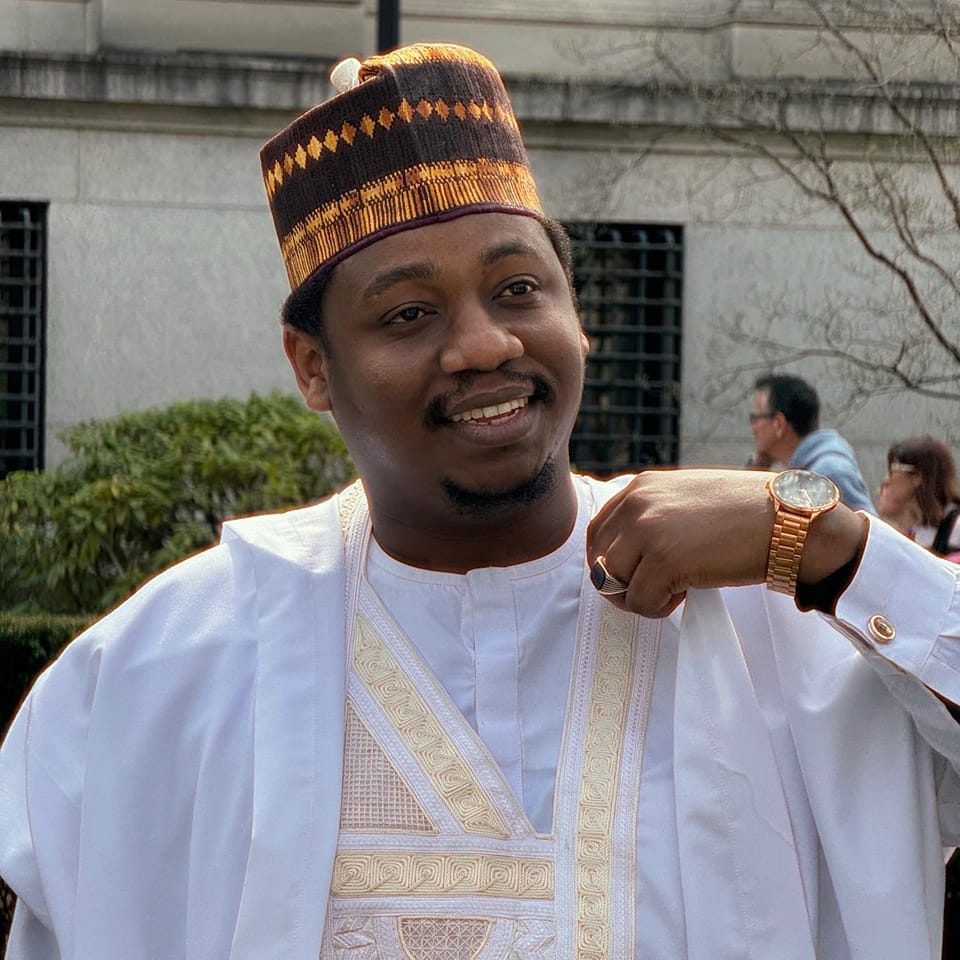
Huzaifa Dokaji
Graduate Recipient, Department of History
Guiliano Fellow, Spring 2025
 “The Making of a Muslim Minority: Dissent, Gender, and Transnationalism in Nigeria’s
Emerging Shi’a Community, 1979-2015” (Evanston, Illinios)
“The Making of a Muslim Minority: Dissent, Gender, and Transnationalism in Nigeria’s
Emerging Shi’a Community, 1979-2015” (Evanston, Illinios)
|
This visit to the Herskovits Library at Northwestern University was undertaken to locate archival materials that shed light on the intellectual, social, and political foundations of Shi’ism in Northern Nigeria. The primary goal was to contextualize the emergence of Shi’a thought within a broader genealogy of Islamic reform, dissent, and minority formation in postcolonial Nigeria. The visit aimed to consult both the Umar Falke and John Paden manuscript collections, particularly materials relating to early late 19th century and early twentieth-century Islamic reform and the interplay between religious scholarship and political authority; as well as colonial and postcolonial newspapers preserved in Northwestern’s microfilm and manuscript repositories. A significant portion of the research time was devoted to reviewing early postcolonial Nigerian newspapers, particularly Gaskiya Ta Fi Kwabo, New Nigerian, and Citizen. These papers offered valuable insight into debates about Islamic reform, political authority, and sectarian identity in Northern Nigeria between the 1950s and 1980s. Articles and editorials revealed how discussions of Iran’s 1979 Revolution, coupled with domestic dissatisfaction with established Muslim leadership, shaped the vocabulary of dissent that later characterized the Shi’a movement. Reports traced early mentions of religious groups that challenged both political elites and the ulama, showing how public discourse gradually framed Shi’a identity as opposed to the established Sunni orthodoxy. The collection thus provides a foundation for tracing the early public visibility of Shi’a sympathizers and the broader transformation of Northern Nigeria’s religious media landscape in the late twentieth century. Among the manuscripts consulted, a notable discovery was Irshadul Ikhwan, a work authored by Usman dan Fodio, a 19th century West African Islamic reformer, that discusses women’s right to education and its indispensable role in Islamic reform. This text provides critical evidence that advocacy for women’s participation in religious and intellectual life has deep roots in West African Islam. Such discoveries challenge assumptions that Sheikh Zakzaky’s emphasis on women’s education and public engagement was imported from Iran. Instead, they reveal a local genealogy of thought linking his movement to older reformist traditions that viewed women’s knowledge as central to moral and social renewal.
|
Over the course of the visit, I systematically reviewed the Falke and Paden catalogues, photographed and catalogued relevant manuscripts, and transcribed selected sections for further analysis. These primary sources are being translated from Arabic and ajami Hausa for inclusion in the dissertation chapter on the Emergence of Shi’a Thought in Northern Nigeria. I also compiled metadata for approximately 31 archival items, including date, author, language, and thematic focus, to build a digital database for long-term analysis. Consultations with librarians and archivists at Herskovits were instrumental in locating under-catalogued or cross-referenced items, particularly newspaper supplements and private papers donated by Northern Nigerian scholars. The Northwestern visit provided concrete archival evidence to advance my central argument that Nigerian Shi’ism is best understood as a local intellectual response to postcolonial disillusionment, rather than a foreign implant. By combining newspaper discourse with classical manuscripts, the materials reveal how Northern Nigeria’s intellectual history provided fertile ground for Shi’a thought through its enduring debates about moral authority and legitimacy. This evidence helps reposition Nigerian Shi’ism within a longer trajectory of Islamic intellectual dissent, connecting the ideological genealogy of the movement to earlier intra-Muslim reform debates associated with the Dan Fodio scholarly family. The Northwestern archival visit has substantially advanced the evidentiary and analytical base of my dissertation. The recovered materials offer rare documentation of how intellectual and political contestations over authority, piety, and reform converged to shape the emergence of Nigeria’s Shi’a community. This fieldwork underscores that the roots of Shi’ism in Nigeria are neither accidental nor purely external but deeply connected to the region’s own historical tradition of dissent and scholarship. The findings position the Nigerian Shi’a movement within a broader African history of Islamic intellectual vision and postcolonial critique.
|
GRADUATE STUDENT APPLICATION INFORMATION
UNDERGRADUATE STUDENT APPLICATION INFORMATION
Application Deadlines:
Fall deadline: October 1 (Projects will take place during the Winter Session or spring semester)
Spring deadline: March 1 (Projects will take place during the Summer Session or fall semester)
Please submit any questions here.